



Why Your Standing Desk Might Be Causing More Problems Than It Solves
Views count 631
Remember when standing desks became the office must-have? Around five or six years ago, it seemed like everyone was racing to get one. The message was clear: sitting was killing us, and standing was the answer. Companies scrambled to install adjustable desks, wellness blogs sang their praises, and suddenly your colleague who'd been sitting for twenty years was standing all day, every day. Fast forward to now, and physiotherapists are seeing something interesting. More and more people are coming into clinics with foot pain, ankle problems, and lower back discomfort that started after they switched to standing desks. They're confused, and honestly, a bit frustrated. They did the "right thing" by getting a standing desk, so why does everything hurt?
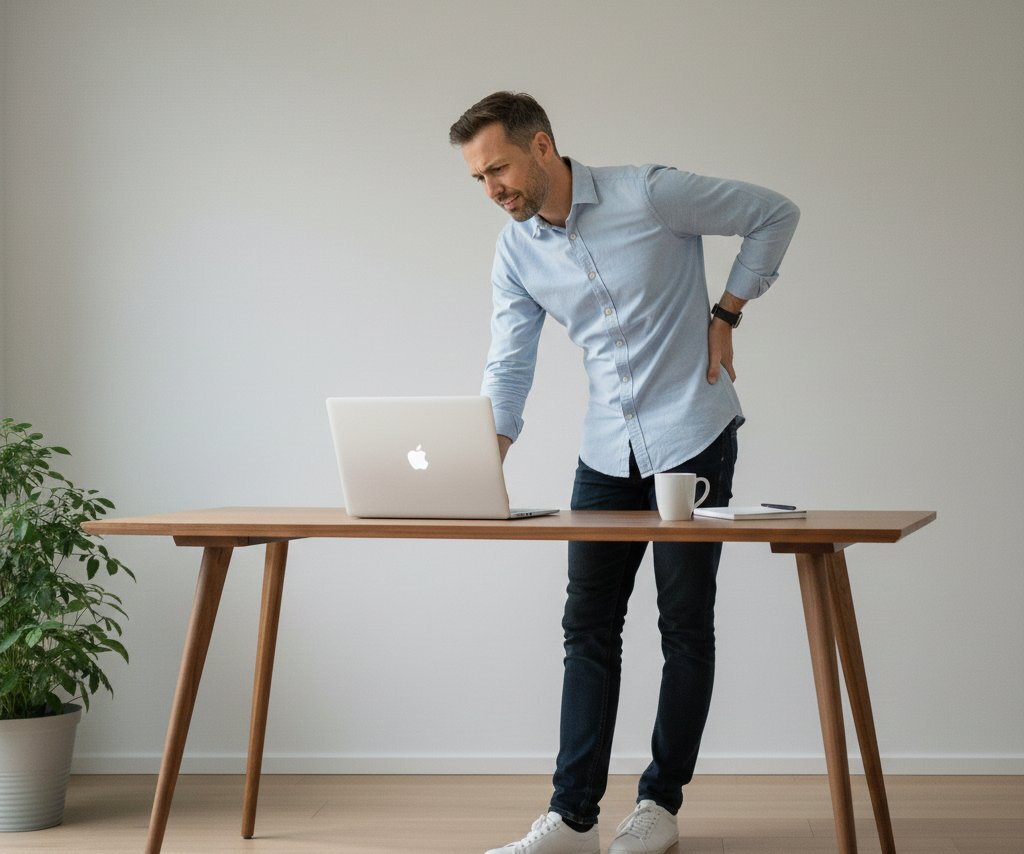
The truth is a bit more nuanced than the wellness industry would have you believe. Standing desks can be brilliant tools when used properly, but they're not the miracle cure we were promised. In fact, if you're using yours incorrectly (and most people are), you might be creating a whole new set of problems whilst trying to fix the old ones.
The Standing Desk Promise vs Reality
The standing desk trend emerged from genuinely concerning research about sedentary behaviour. Studies showed that prolonged sitting was linked to increased risks of cardiovascular disease, diabetes, and even early death. The phrase "sitting is the new smoking" became a rallying cry, and the solution seemed obvious: if sitting is bad, standing must be good.
Early research on standing desks was encouraging. Some studies suggested they could reduce back pain, increase energy levels, and even boost productivity. The logic was straightforward and appealing. Stand more, move more, feel better. Simple.
But as more comprehensive research has emerged, the picture has become considerably more complex. A 2018 study published in the journal Ergonomics found that prolonged standing can lead to significant discomfort and decreased cognitive function. Another large-scale study from 2021 showed that standing for extended periods didn't provide the cardiovascular benefits that researchers had hoped for. In some cases, it actually increased the risk of varicose veins and circulatory problems.
As physiotherapists have watched this research evolve.The real issue wasn't sitting versus standing at all. It was prolonged static postures, regardless of whether you're on your backside or on your feet. Our bodies are designed for movement and variety, not for holding any single position for hours on end.
Common Problems at the Clinic
In the past couple of years, physiotherapists have noticed a definite uptick in specific complaints from standing desk users. These aren't random aches and pains, they follow predictable patterns that tell us a lot about how people are using (or misusing) their standing desks.
Foot and ankle pain is probably the most common complaint physiotherapists hear. People develop plantar fasciitis, that sharp heel pain that's worst in the morning. They're seeing Achilles tendon problems and general foot fatigue. When you stand for hours, especially on hard floors, the constant loading on your feet and ankles creates inflammation and strain that builds up over time.
Knee discomfort comes next. Standing puts continuous compression on your knee joints, and if you're locking your knees (which most people do without realising), you're reducing circulation and increasing joint stress. Patients who never had knee problems before are suddenly dealing with persistent aching after a few months of all-day standing.
Lower back pain is perhaps the most ironic complaint, given that avoiding back pain was the whole point of getting a standing desk in the first place. But here's the thing: most people don't stand with good posture. They sway their hips forward, arch their lower backs, and create as much strain as poor sitting posture would. Sometimes more, because at least when you're sitting badly, you're collapsing into a chair that's supporting some of your weight.
Physiotherapists also see hip flexor tightness and shoulder tension, often from people trying to compensate for uncomfortable standing positions. They lean on one leg, they hunch over their keyboards, they do all sorts of adaptations that seem to help in the moment but create problems over time.
We've had a talk with the team at Applied Motion who recently treated a graphic designer in his early thirties who came in after six months of standing all day at work. He'd been so committed to his new standing desk that he barely sat down during his entire workday. By the time he sought help, he had developed severe plantar fasciitis in both feet, his calves were constantly tight, and he was getting sharp pains in his lower back every evening. He'd done everything "right" according to the wellness advice he'd read online, but his body was telling a different story.
Why Static Standing Can Be Worse Than Sitting
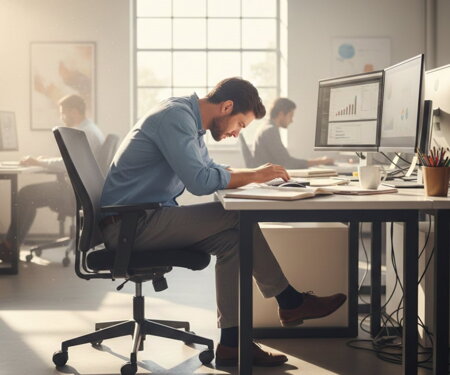
This might sound counterintuitive, but prolonged standing can actually be more problematic than prolonged sitting in some ways. When you stand still for extended periods, you're essentially asking your body to maintain an upright position against gravity without much variation or rest.
From a biomechanical perspective, standing places continuous compressive load on your spine, hips, knees, and ankles. Unlike sitting, where your chair takes much of your body weight, standing means your muscles and joints are constantly working to keep you upright. This might sound like good exercise, but it's not. It's a low-grade stress that accumulates throughout the day without the benefit of actual strengthening.
Blood circulation becomes a real concern with prolonged standing. When you sit, blood can pool in your legs, which isn't ideal. But when you stand still, especially without much movement, you've got gravity working against the return of blood from your lower limbs to your heart. Your calf muscles normally act as a pump to help push blood back up, but if you're standing relatively still, that pumping action is minimal. This can lead to swelling in the feet and ankles, and over time, can contribute to varicose veins and other circulatory problems.
There's also the energy expenditure myth to address. Yes, standing burns slightly more calories than sitting, but we're talking about a negligible difference. You might burn an extra 20 calories per hour standing versus sitting. That's roughly equivalent to two almonds. If weight management or calorie burning is your goal, standing at your desk isn't going to move the needle in any meaningful way.
Perhaps most concerning is the fatigue factor. When you're standing all day, you get tired. Not the good kind of tired from a productive workout, but a draining fatigue that affects your concentration and work quality. Studies have shown that prolonged standing can impair cognitive function and decision-making. Your body is working hard to stay upright, and that takes energy away from your brain's ability to focus on complex tasks.
Signs Your Standing Desk Setup Is Hurting You
Your body is usually pretty good at sending warning signals when something isn't working. The trouble is, we've become quite skilled at ignoring those signals, especially when we've invested in expensive equipment or committed to a new health routine.
Pain that worsens as the day goes on is a major red flag. If you start your morning feeling fine but by mid-afternoon your feet are aching, your calves are tight, or your back is throbbing, your standing desk setup (or your usage pattern) needs adjusting. This progressive discomfort indicates that you're accumulating stress faster than your body can recover from it.
Swelling in your feet and ankles by the end of the workday is another clear sign. Your shoes shouldn't feel tighter at 5pm than they did at 9am. If they do, you're likely standing too much without enough movement or position changes.
Watch out for compensatory postures too. Are you constantly shifting your weight from one foot to the other? Leaning heavily on your desk? Propping one foot up on something? These are all signs that your body is desperately seeking relief from a position it can't sustain comfortably. Whilst weight shifting is actually good (we want movement), if you're doing it constantly out of discomfort rather than as intentional variation, that's a problem.
Fatigue that affects your work quality is particularly telling. If you find yourself making more mistakes, struggling to concentrate, or feeling mentally drained by mid-afternoon, your standing routine might be part of the problem. Physical fatigue bleeds into mental fatigue more than most people realise.
If you're experiencing any of these signs consistently, it's worth getting a professional assessment. What seems like minor discomfort now can develop into chronic problems if left unaddressed. We've seen too many people push through pain thinking it will eventually get better, only to end up with injuries that take months to rehabilitate.
The Right Way to Use a Standing Desk
Here's the thing that most wellness blogs won't tell you: the magic isn't in standing, it's in varying your position throughout the day. Your standing desk should be one tool in a broader strategy of movement and position changes, not a replacement for sitting altogether.
Research suggests that the optimal approach is something like a 1:1 or 2:1 ratio of sitting to standing, with regular transitions between the two. You might stand for 30 minutes, then sit for 30 minutes, then stand again. Or perhaps sit for 45 minutes and stand for 20. The exact ratio matters less than the fact that you're changing positions regularly. Some ergonomics experts recommend the "20-8-2 rule": for every 30 minutes, sit for 20, stand for 8, and move around for 2.
When you are standing, proper setup is crucial. Your monitor should be at eye level, with the top of the screen at or slightly below your natural eye line. You shouldn't have to tilt your head up or down to see your work. The monitor should be about arm's length away, maybe slightly closer if you need glasses or have vision concerns.
Your keyboard and mouse need to be positioned so your elbows are at roughly 90 degrees when you're typing. Your wrists should be straight, not bent up or down. A lot of people set their standing desk too high, which forces them to shrug their shoulders and creates neck and shoulder tension. If you're not sure about the right height, start a bit lower than you think and adjust upward until it feels comfortable.
Footwear makes a bigger difference than you might expect. If you're going to stand for portions of your day, supportive shoes are essential. Those fashionable but flat shoes might look great, but they're not doing your feet any favours during prolonged standing. You don't need to wear running shoes to the office, but some arch support and cushioning will make a noticable difference to how your feet and legs feel by day's end.
Anti-fatigue mats are one of those products with mixed evidence. Some people swear by them, whilst others find them awkward or unnecessary. If you do use one, look for something with moderate cushioning, not too soft. An overly squishy mat can actually create instability and make your muscles work harder to maintain balance. Think of it as a slight buffer, not a pillow for your feet.
Micro-movements whilst standing are absolutely vital. Shift your weight from foot to foot. Do small calf raises. Step side to side. March in place briefly. These tiny movements keep your muscles engaged, promote blood circulation, and prevent the static loading that causes problems. Set a reminder on your phone if you need to, because when you're focused on work, it's easy to stand completely still for an hour without realising.
Better Alternatives and Complementary Strategies
Standing desks aren't the only solution to the sedentary work problem. In fact, they're probably not even the best solution for most people. There are several approaches that might serve you better, either on their own or in combination with occasional standing.
Active sitting options like wobble stools or balance ball chairs can provide some of the movement benefits without the strain of prolonged standing. These tools engage your core muscles and allow for subtle, constant movement whilst you work. They're not perfect for everyone (some people find them distracting or uncomfortable), but they're worth considering if you're looking for alternatives to traditional chairs.
Walking meetings and phone calls are brilliant for breaking up static time. If you're on a call where you don't need to look at your screen, walk around. Take your mobile and pace your office, or step outside for some fresh air. You'd be surprised how much movement you can accumulate this way, and many people find they think more clearly whilst walking anyway.
Regular movement breaks are probably the single most effective strategy for office workers. Every 30 to 45 minutes, take two minutes to move. Walk to get water, do some gentle stretches, look out a window at something far away (your eyes need breaks too). These frequent, brief interruptions to sitting or standing are more beneficial than one long bout of standing or one trip to the gym after work.
Desk exercises and stretches can help too, although you don't need to do anything elaborate. Simple movements like shoulder rolls, neck stretches, standing hip flexor stretches, or ankle circles can make a real difference. The key is consistency rather than intensity. Small, frequent movements throughout the day beat occasional heroic stretching sessions.
What you do outside of work hours matters enormously as well. Regular strength training and mobility work can build resilience that helps you tolerate whatever positions your workday throws at you. If you're sitting or standing for most of your day, your body needs dedicated movement time to maintain healthy function. This doesn't mean you need to become a gym enthusiast, but some form of regular, varied physical activity is pretty much essential for anyone with a desk job.
Don't underestimate the importance of proper footwear throughout your entire day, not only at work. If you're wearing shoes that don't support your feet properly during your commute or your evening activities, you're not giving your body a chance to recover from the stresses of the workday.
Quick Self-Assessment: Is Your Standing Desk Working for You?
Take a moment to honestly assess your standing desk usage. Do your feet or ankles hurt by the end of most workdays? Are you constantly shifting your weight or looking for something to lean on? Do you feel more tired or less focused since you started using your standing desk? Has your lower back pain actually gotten worse rather than better? Do you avoid using the standing function because it's uncomfortable?
If you answered yes to several of these, your standing desk setup or usage pattern needs adjustment. The good news is that with some modifications and a better approach to movement throughout your day, you can turn things around.
Finding What Actually Works
Standing desks aren't bad. They're not a scam or a useless trend. But they're tools that need to be used thoughtfully, as part of a broader approach to movement and health during your workday. The problem isn't the desks themselves, it's the oversimplified message that standing is inherently better than sitting.
The best position for your body is the next position. Variety, movement, and regular changes are what your body craves. Whether you're sitting, standing, or moving around, staying in any single position for too long will eventually cause problems.
If you've got a standing desk and it's causing you grief, don't give up on it entirely. Experiment with your usage patterns. Try shorter standing intervals with more frequent position changes. Check your ergonomic setup. Pay attention to your footwear and consider an anti-fatigue mat. Most importantly, make sure you're incorporating genuine movement breaks into your day, not assuming that standing alone is enough.
And if you're dealing with persistent pain or discomfort that isn't resolving with these adjustments, it's probably time to get a proper assessment. At Applied Motion Physio, we look at your individual situation, your work setup, your movement patterns, and your body's specific needs. There's no one-size-fits-all solution, and what works brilliantly for your colleague might be completely wrong for you.
Your body is pretty smart about telling you what it needs, if you're willing to listen. Pain and discomfort aren't things to push through or ignore, they're valuable feedback. Whether you're using a standing desk or not, the goal is the same: to get through your workday feeling reasonably comfortable and to maintain long-term health and function in your body. Sometimes that means standing. Sometimes it means sitting. Always, it means moving.
Tags
- standing desk problems
- standing desk risks
- ergonomic office setup
- standing desk disadvantages
- prolonged standing health
- varicose veins standing
- lower back pain standing
- standing desk alternatives
- sit-stand desk balance
- office ergonomics 2025
- standing desk fatigue
- circulation problems standing
- joint pain standing desk
- proper desk posture
- ergonomic workspace
- standing desk myths
- healthy office habits
- standing desk duration
- alternating sitting standing
- ergonomic chairs
- active sitting
- standing desk tips
- workplace wellness
- office health risks
- posture problems standing
- standing desk research
- ergonomic solutions
- office comfort
- standing desk benefits risks
- workspace optimization