



Precision, Efficiency, and Innovation: Why Injection Molding Remains the Backbone of Modern Manufacturing
Views count 326
In today’s fast-paced industrial landscape, manufacturers face increasing pressure to deliver high-quality products at competitive prices while maintaining consistency, speed, and sustainability. Among the many production technologies available, injection molding stands out as one of the most reliable and versatile methods for producing plastic components across virtually every sector—from automotive and electronics to medical devices and consumer goods.
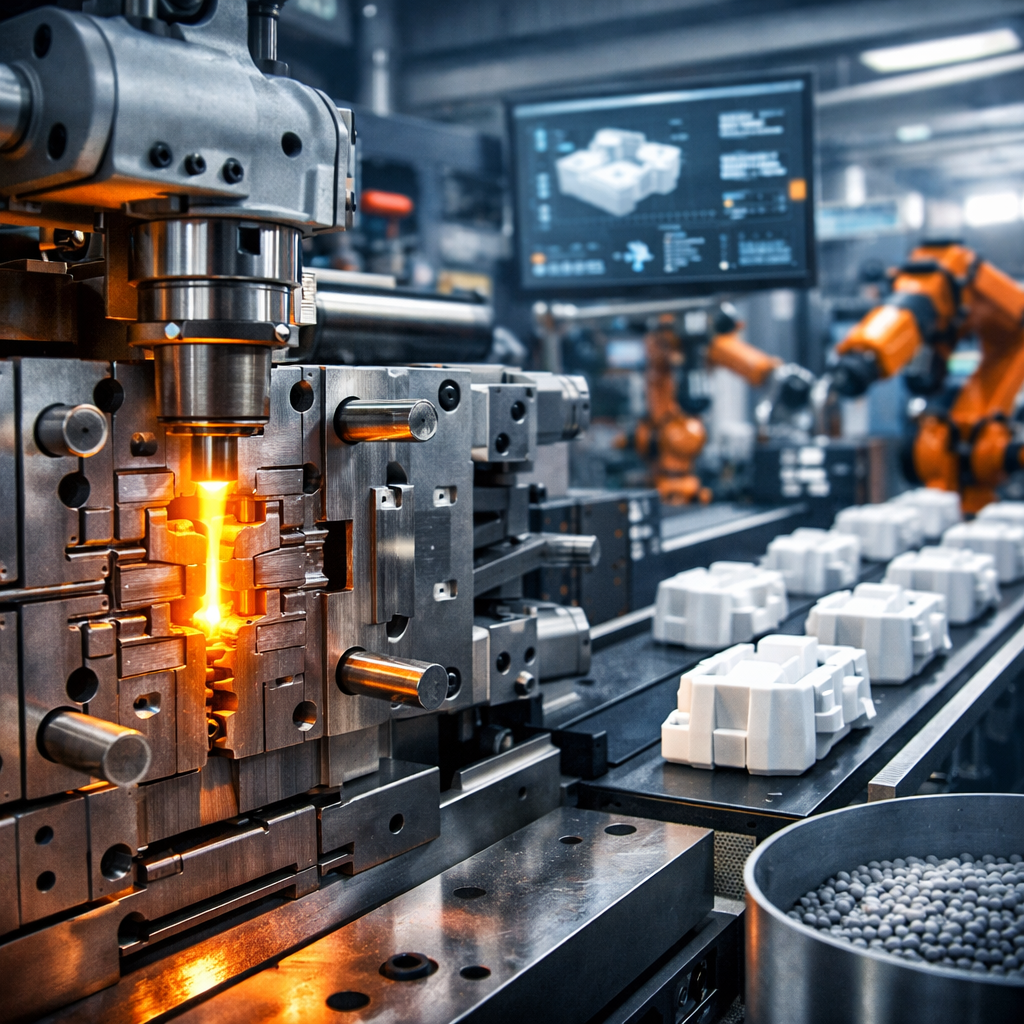
At its core, injection molding is a process in which molten plastic is injected into a precisely engineered mold cavity, cooled, and then released as a finished part. This seemingly simple sequence is supported by decades of engineering innovation, material science advancements, and automation technologies that allow manufacturers to produce millions of identical parts with remarkable accuracy. For companies seeking dependable production solutions, professional partners such as Artilux NMF offer specialized services in injection molding that combine technical expertise with modern equipment and strict quality control.
One of the greatest advantages of injection molding is its ability to achieve extremely tight tolerances. This precision is essential in industries where even the smallest deviation can compromise performance or safety. Whether producing medical components that must meet regulatory standards or automotive parts that must withstand mechanical stress, injection molding ensures repeatability at scale. The mold itself—often made from hardened steel—acts as the blueprint for every part produced, guaranteeing uniformity throughout the entire production run.
Efficiency is another defining characteristic of the process. Once the mold is created, cycle times can be remarkably short, often measured in seconds. This makes injection molding ideal for high-volume production, where speed directly impacts cost-effectiveness. Additionally, modern machines are designed to minimize waste by reusing excess material, contributing to more sustainable manufacturing practices. With growing global emphasis on environmental responsibility, this efficiency is more important than ever.
Material versatility further enhances the appeal of injection molding. Manufacturers can choose from thousands of thermoplastics, each offering unique properties such as heat resistance, flexibility, transparency, or impact strength. This flexibility allows designers to tailor components to specific applications without compromising performance. Advanced additives and fillers can also be incorporated to improve durability, reduce weight, or enhance aesthetic qualities.
Another key benefit is the ability to integrate complex geometries and functional features directly into the molded part. Snap-fits, hinges, threads, and textured surfaces can all be produced in a single manufacturing step, reducing the need for secondary operations. This not only lowers production costs but also shortens lead times and simplifies assembly processes.
As industries continue to evolve, so does injection molding. Automation, robotics, and real-time monitoring systems are transforming production floors, enabling greater consistency and reducing human error. Smart manufacturing technologies allow operators to track machine performance, material flow, and product quality with unprecedented precision. These innovations ensure that injection molding remains a future-ready solution capable of meeting the demands of modern production.
For businesses seeking reliable, scalable, and cost-efficient manufacturing, injection molding remains an indispensable technology. By partnering with experienced providers who understand both the technical and strategic aspects of the process, companies can unlock new levels of product quality and operational efficiency. Whether launching a new product line or optimizing an existing one, the right injection molding partner can make all the difference.
Tags
- injection molding
- plastic manufacturing
- mold design
- industrial production
- precision engineering
- automation
- thermoplastics
- manufacturing efficiency
- product development
- sustainable production
- high-volume manufacturing
- mold tooling
- plastic components
- production technology
- material science
- industrial innovation
- robotics in manufacturing
- quality control
- modern manufacturing
- Artilux NMF