



Beyond the Scruff: Modern Strategies for Stress-Free Feline Medicine
Views count 245
The "difficult cat" is often just a terrified cat. For a species that prioritizes territory and predictability above all else, the transition from a quiet living room to a bustling veterinary clinic is nothing short of a sensory assault. This stress isn't just a behavioral hurdle; it is a clinical one. Elevated cortisol and catecholamines can mask symptoms, skew blood glucose readings, and make even routine examinations physically taxing for the patient and the practitioner.
The "difficult cat" is often just a terrified cat. For a species that prioritizes territory and predictability above all else, the transition from a quiet living room to a bustling veterinary clinic is nothing short of a sensory assault. This stress isn't just a behavioral hurdle; it is a clinical one. Elevated cortisol and catecholamines can mask symptoms, skew blood glucose readings, and make even routine examinations physically taxing for the patient and the practitioner.
Moving toward a "fear-free" approach requires more than just a gentle touch. It demands a tactical overhaul of the clinical environment and the physical tools we use to manage feline patients.
The Sensory Landscape of the Feline Clinic
Cats experience the world through a hyper-acute lens. The scent of a nervous dog in the waiting room or the high-pitched hum of a fluorescent light can trigger a fight-or-flight response before the cat even leaves its carrier.
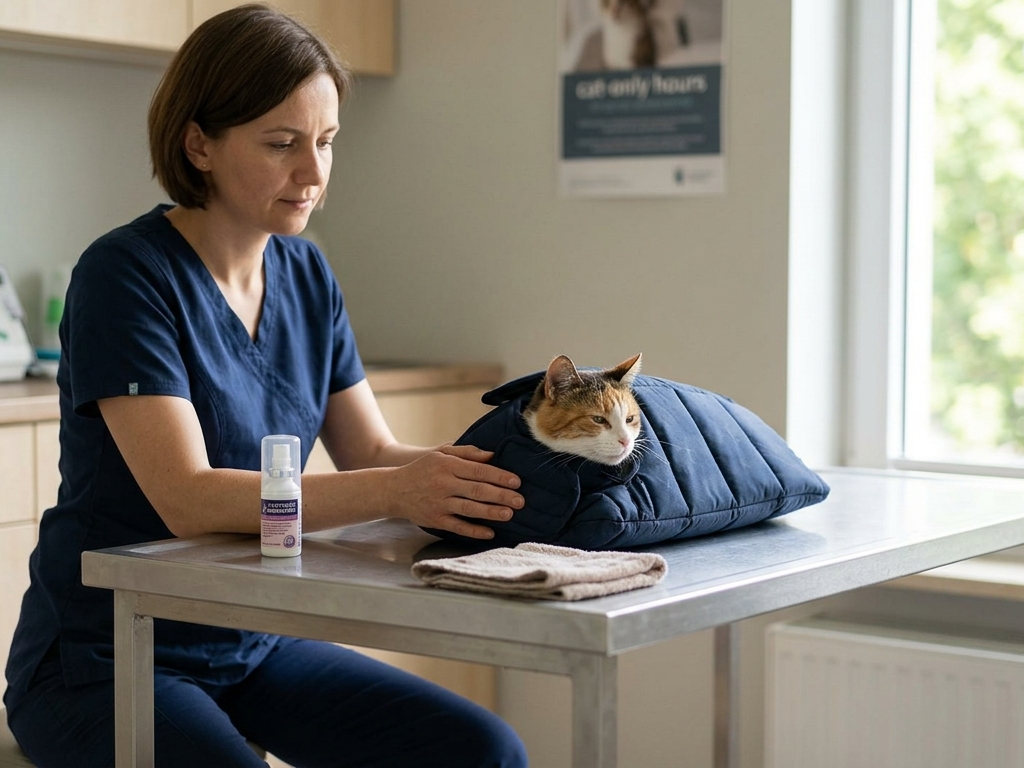
To mitigate this, we must look at the clinic through their eyes (and noses). Implementing "cat-only" hours or separate waiting areas is a start, but the real work happens on the exam table. By neutralizing the environment—using synthetic pheromones and minimizing sudden auditory triggers—we can maintain a cat's "threshold," keeping them below the point of panic where medical intervention becomes a struggle.
Precision Positioning Without the Power Struggle
One of the greatest sources of trauma for feline patients is traditional manual restraint. Every practitioner has experienced the escalating tension of a cat that feels pinned. Modern veterinary medicine has moved toward low-stress handling, which relies on supportive equipment rather than brute force.
-
Secure Immobilization: For subcutaneous or intramuscular treatments, a specialized cat restraint bag for injection is a game-changer. It provides a "burrito-like" sense of security, limiting movement while keeping the patient feeling shielded rather than attacked.
-
Ergonomic Support: Utilizing a dedicated pet positioner ensures that the animal is physically supported in a natural posture. When a cat feels stable on the table, it is far less likely to scramble.
-
Diagnostic Comfort: For specialized imaging, such as cardiology, a veterinary echo mattress allows for comfortable, prolonged positioning that reduces the need for heavy sedation or repeated adjustments.
Redefining the Dental and Surgical Workflow
Dental health is a cornerstone of feline wellness, yet the wet, often messy nature of these procedures can be stressful to manage. Efficiency is the enemy of stress; the faster and more smoothly a procedure goes, the less time the patient spends under anesthesia or in recovery.
Using a dental drip tray veterinary setup keeps the patient dry and stable, preventing the hypothermia and discomfort associated with fluid runoff. Managing the micro-environment around the patient during these procedures is just as vital as the surgery itself. When we refine our toolset, we naturally shorten the procedure time and improve the recovery trajectory.
The Owner’s Role in the Clinical Loop
Stress management begins at home. A cat that has been chased around the house and forced into a carrier is already "red-lining" before they reach your front door.
We must educate clients on pre-visit conditioning. This includes leaving the carrier out as a permanent piece of furniture and using "happy visits"—where the cat is weighed and fussed over without any needles involved—to build positive associations. When owners feel empowered and calm, that energy translates directly to the animal.
The Path Forward
Minimizing feline stress is not a luxury; it is a standard of care. By integrating specialized equipment like veterinary positioners and restraint bags, we shift the narrative from "controlling the cat" to "supporting the patient."
A tranquil clinical experience leads to more accurate diagnostics, safer staff environments, and, most importantly, better health outcomes for our feline companions. When we prioritize the psychological well-being of the cat, the medicine simply becomes easier to practice.
Tags
- feline medicine
- stress-free veterinary care
- cat handling techniques
- low-stress handling
- feline behavior
- cat-friendly clinic
- veterinary oncology
- animal welfare
- scruffing alternatives
- feline stress management
- veterinary medicine
- cat health
- stress-free exams
- feline environmental triggers
- veterinary practice tips
- cat friendly practice
- feline nursing
- veterinary consultation
- cat behavior modification
- feline medicine strategies